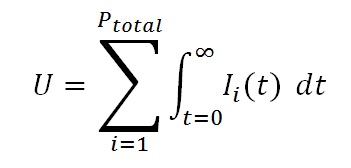
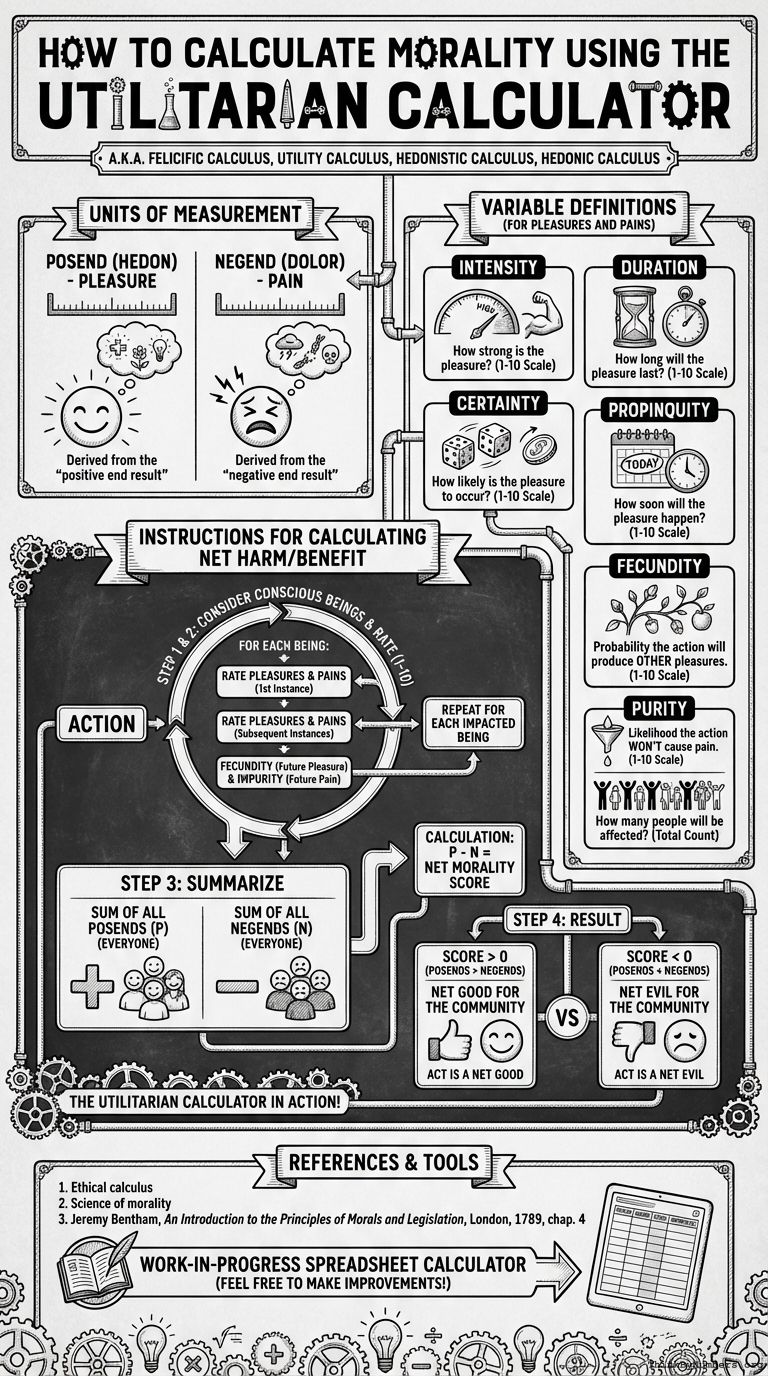
The felicific calculus is an algorithm for calculating the degree or amount of pleasure that a specific action is likely to cause. The algorithm is also known as the utility calculus, the hedonistic calculus, and the hedonic calculus.
Here’s a work-in-progress spreadsheet to do the calculation. (Feel free to make improvements!)
Morality Calculator
Net score: 0 hedons
Felicific calculus formula used: intensity × duration × certainty × propinquity × (1 + fecundity − impurity) × extent, with duration, certainty, propinquity, fecundity, and impurity each scaled to 0–1 (impurity = 1 − purity/10).
Hedonic Calculus, Hedonistic Calculus: Same Bentham, Different Name
Felicific calculus, hedonic calculus, hedonistic calculus, utility calculus, and moral calculus are five names for the same seven-variable algorithm Jeremy Bentham published in An Introduction to the Principles of Morals and Legislation (1789). “Felicific” is just Latin for “happiness-making,” which philosophers prefer because “hedonistic calculus” sounds like math you’d do at a casino. Whatever you call it, the procedure is identical: score the seven variables above, sum the pleasures, subtract the pains.
Units of Pleasure and Pain
The units of measurements used in the felicific calculus are:
- Negend (aka dolor) – Unit of pain. Derived from the “negative end result”
- Posend (aka hedon) – Unit of pleasure. Derived from the “positive end result”
Variable Definitions
Variables of the pleasures and pains included in this calculation are:
- Intensity: How strong is the pleasure?
- Duration: How long will the pleasure last?
- Certainty or uncertainty: How likely or unlikely is it that the pleasure will occur?
- Propinquity or remoteness: How soon will the pleasure happen?
- Fecundity: The probability that the action will produce other pleasures.
- Purity: The likelihood that the action won’t cause pain.
- Extent: How many people will be affected?
Instructions for Calculating Net Harm/Benefit of an Action
- Consider a conscious being most immediately to be affected by an action. Rate the following for this being on a scale of 1 to 10:
- each different pleasure that appears to be produced by it in the first instance
- each pain that seems to be produced by it in the first instance
- each pleasure that appears to be produced after the first. The sum constitutes the fecundity of the first pleasure and the impurity of the first pain.
- each pain produced by it after the first. The sum constitutes the fecundity of the first pain and the impurity of the first pleasure.
- Repeat the process for each conscious being impacted.
- Sum the posends for everyone and subtract the negends for everyone.
- The act is a net good for the community if the total exceeds 0 (i.e., posends exceeded negends). It’s a net evil if the result is below 0.
Worked Example: Eating Your Roommate’s Leftover Pizza
- Your pleasure: cold pizza at 2 a.m., intensity 8, certain and immediate — +8 posends
- Your impurity: guilt, plus a passive-aggressive sticky note tomorrow — −3 negends
- Roommate’s pain: discovering the empty box (7), plus eroded trust breeding future pains (2) — −9 negends
- Net total: 8 − 12 = −4 hedons. Verdict: net evil. Buy your own pizza.
References
- Ethical calculus
- Science of morality
- Jeremy Bentham, An Introduction to the Principles of Morals and Legislation, London, 1789, chap. 4
- Spreadsheet Calculator (Feel free to make improvements!)
Comments