What Voters Actually Want
According to Rasmussen Reports, voters have opinions about corporate welfare. Shocking, I know.
In a democracy, what the voters want matters. This is why we ask them what they want, write it down carefully, and then do the opposite.
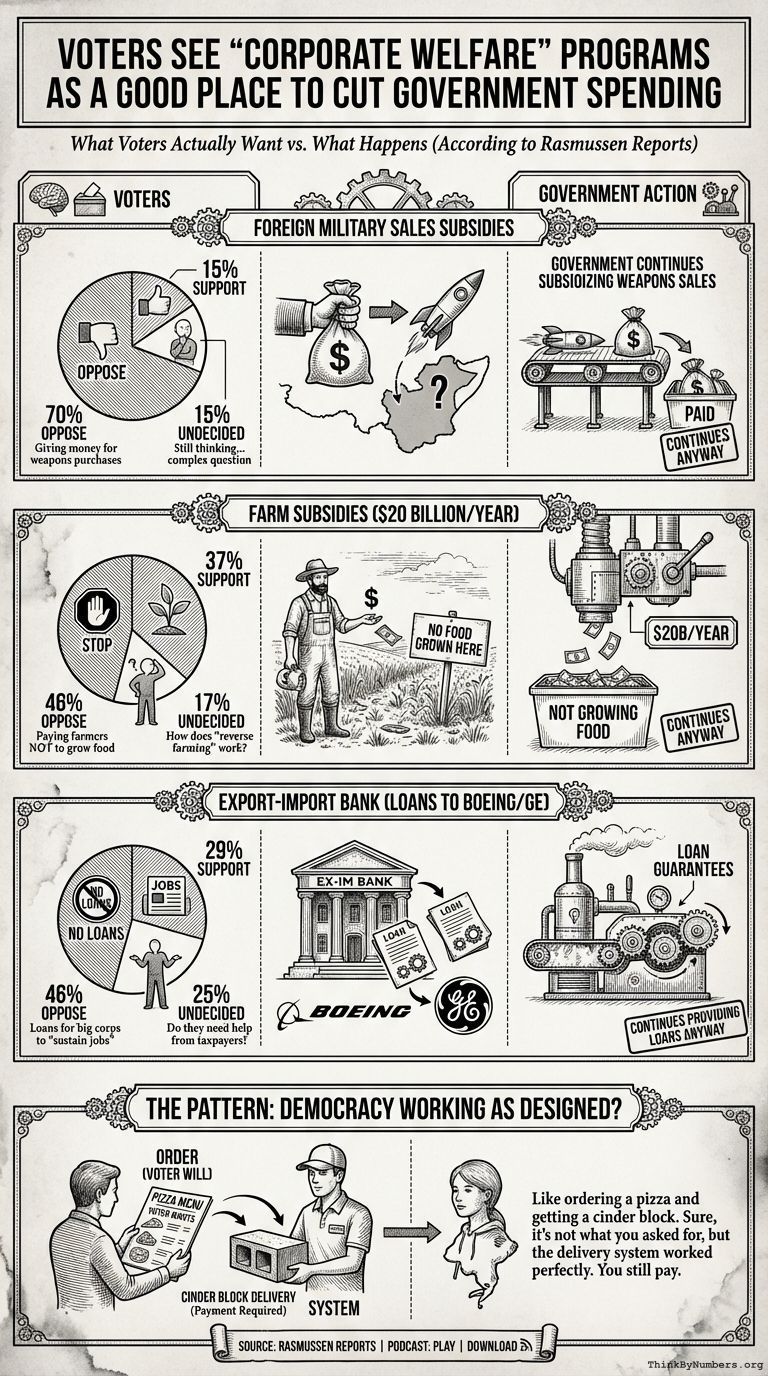
Foreign Military Sales Subsidies
70% of voters oppose giving foreign countries money to buy weapons from US companies.
15% support it.
15% are still thinking about whether subsidizing weapons sales is a good idea.
To be fair to that 15%, it IS a complex question. Should we pay other countries to buy murder equipment from us? Really makes you think. Ideally for less than 30 seconds, because then you might notice we're doing it anyway.
The government does it anyway.
Farm Subsidies
The US government gives $20 billion per year to farms.
46% of voters think this should stop.
37% think it should continue.
17% haven't decided if paying farmers not to grow food makes sense.
The 17% undecided voters are probably just trying to understand how "paying someone to NOT grow food" works. It's simple: you give them money, and then food doesn't happen. It's like reverse farming, which is apparently something we do now.
The government continues giving farmers $20 billion per year.
Export-Import Bank
The Export-Import Bank gives billions in loans and loan guarantees to Boeing and General Electric. The stated purpose is to "sustain American jobs."
29% of voters support this.
46% oppose it.
25% are undecided about whether Boeing needs help from taxpayers.
The government continues providing these loans.
The Pattern
In each case, voters oppose corporate subsidies by large margins. In each case, the subsidies continue.
This is democracy working exactly as designed. The design just isn't what you were told it was.
It's like ordering a pizza and getting a cinder block. Sure, it's not what you asked for, but the delivery system worked perfectly. The cinder block arrived on time and you still have to pay for it.
Source: Rasmussen Reports
Podcast: Play in new window | Download
Comments