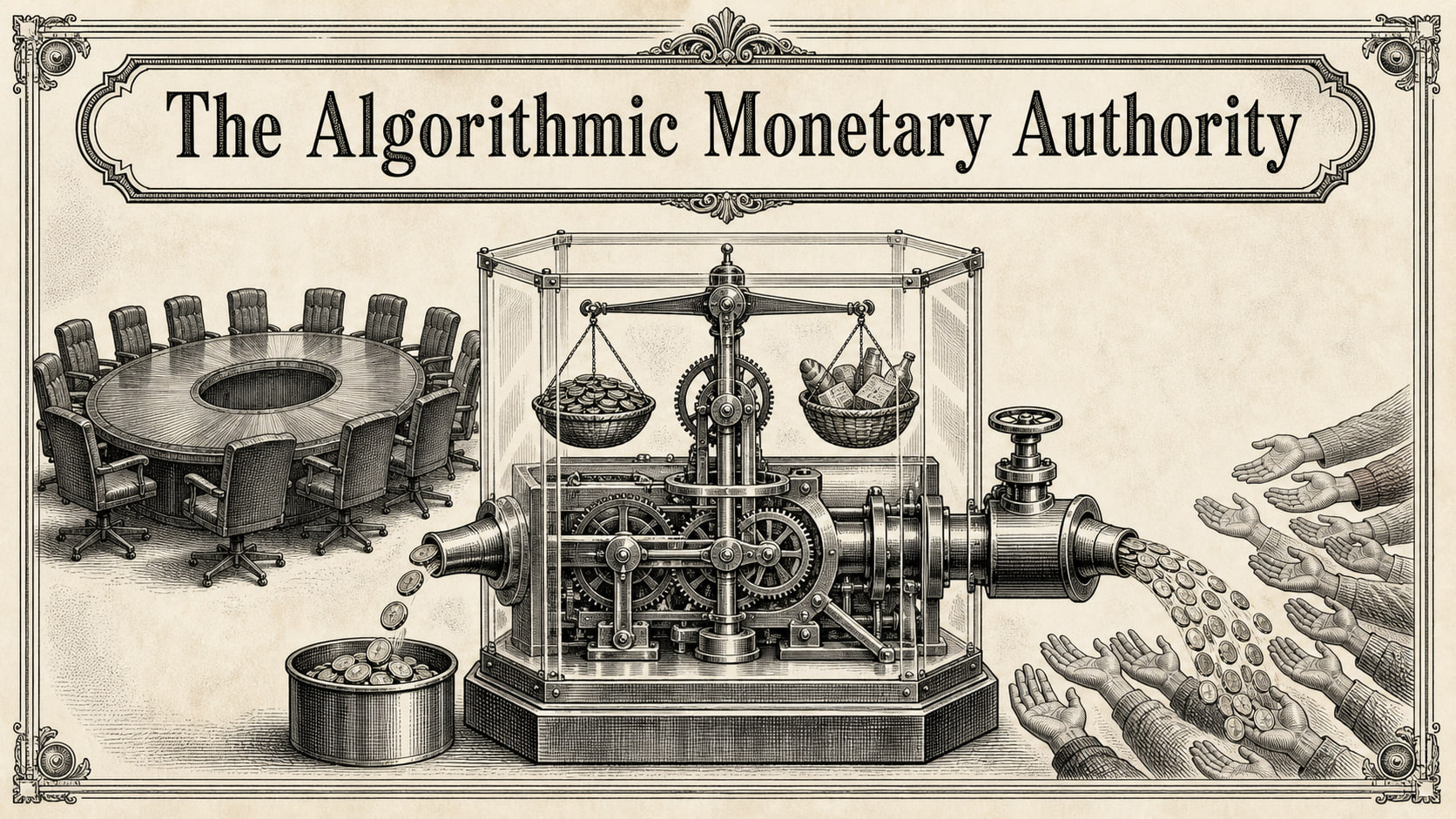
Twelve humans around a table decide what your money is worth. The replacement is one formula, and it cannot be lobbied, panicked, or invited to Jackson Hole.
Twelve humans around a table decide what your money is worth. The replacement is one formula, and it cannot be lobbied, panicked, or invited to Jackson Hole.

Your SEC protects you from the best-returning asset class unless you are already rich. The replacement protects you with information instead of exclusion.
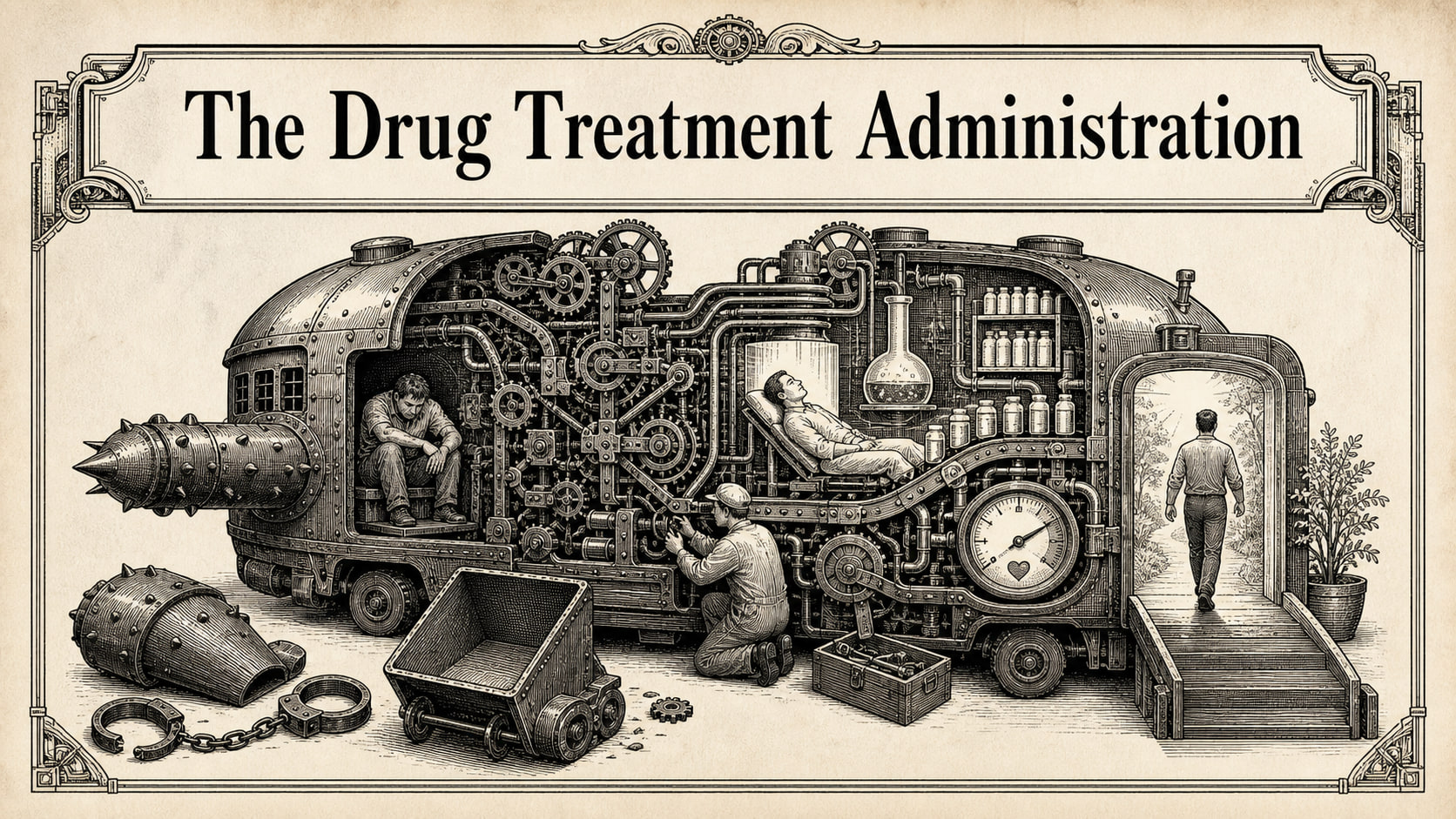
The DEA becomes the DTA. One letter changes; the war ends. Addiction is a disease, and you already bought the machine that treats diseases.
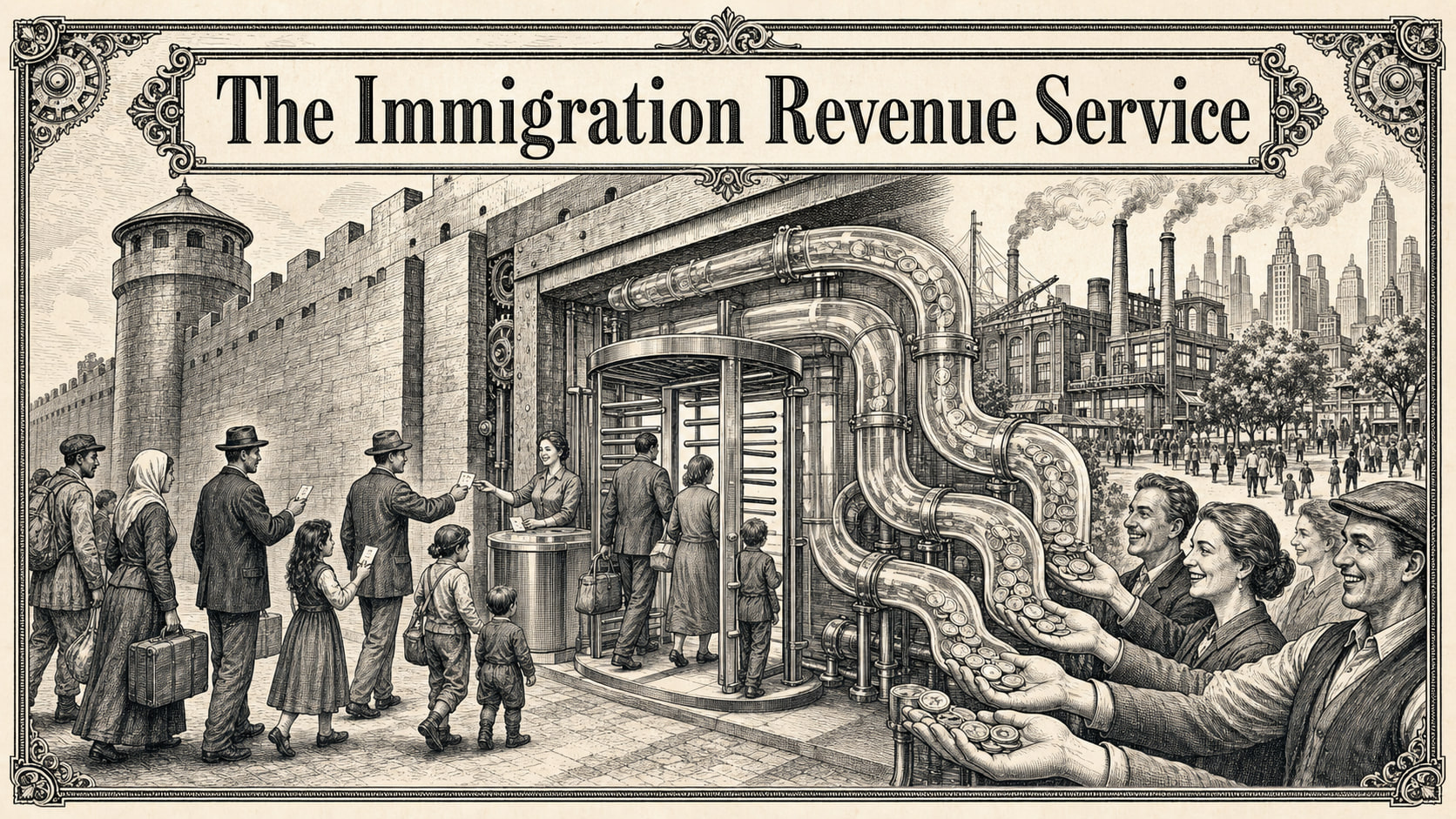
The current system hunts people who want to work. The replacement sells them tickets, taxes the surplus, and pays you the dividend. It shares initials with your tax collector on purpose; it is the only agency in history whose customers queue up, pay, and say thank you.
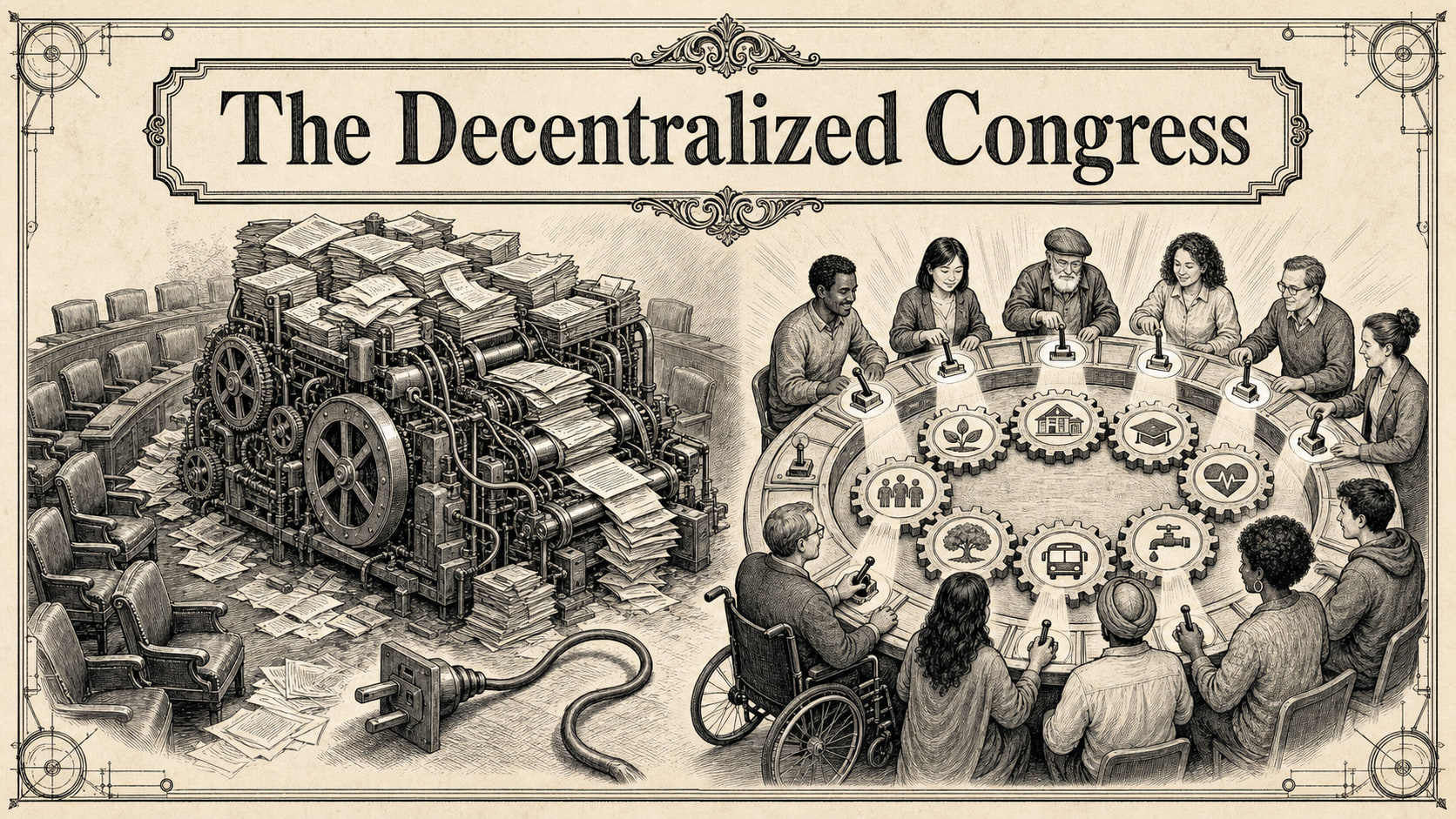
535 humans vote on 5,000-page bills they have not read, funded by the industries the bills regulate. The replacement is you, twenty questions a year, with the evidence attached.
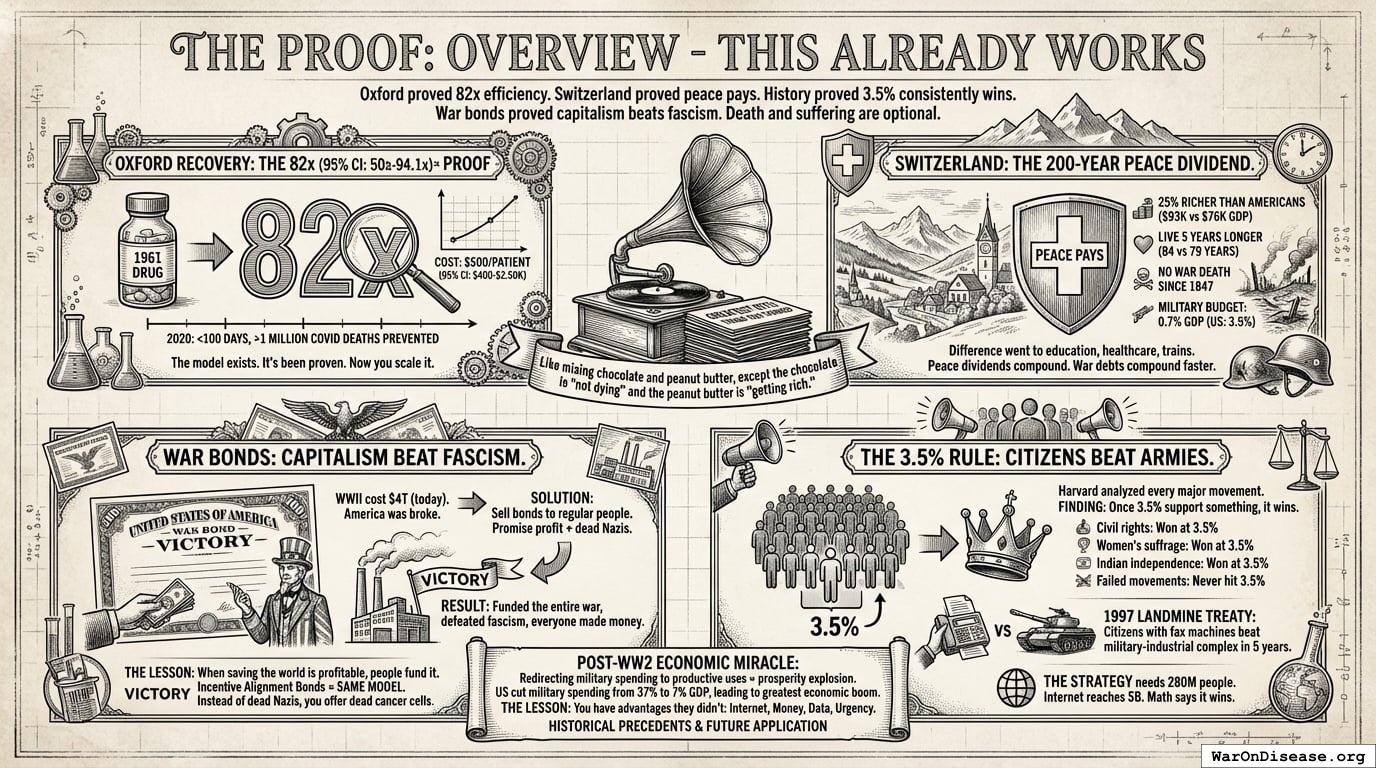
This Already Works - Pragmatic trials prove 44.1x (90% CI: 12.8x-210x) efficiency. History proves every component. Switzerland, war bonds, landmines, the 3.5% rule, and Wall Street's craziest bets all prove humans can accidentally do smart things when properly motivated.
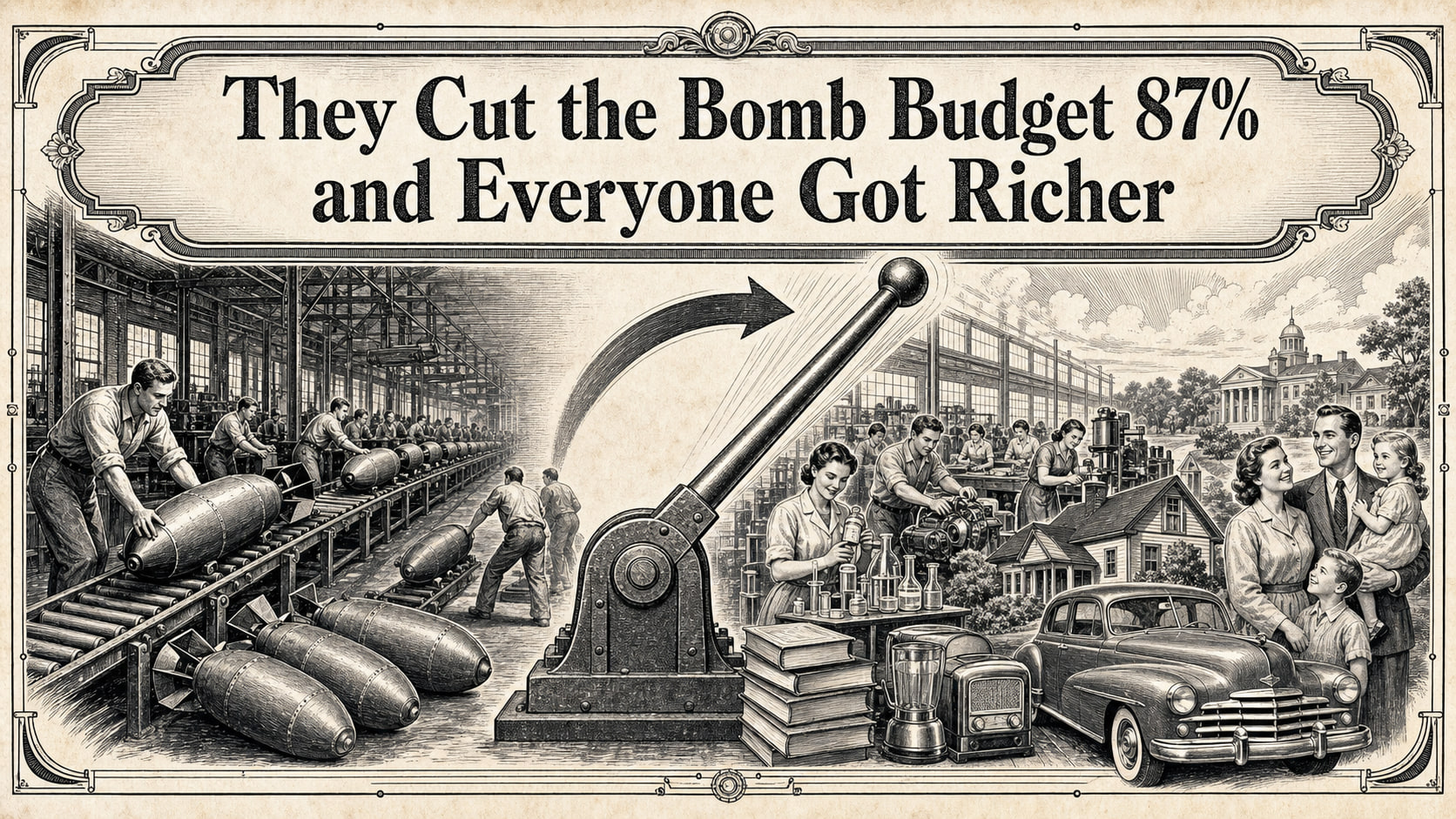
After World War 2, they cut the bomb budget 87.6% and walked into the largest rise in living standards in history. Then they put it back. Here is what happened.
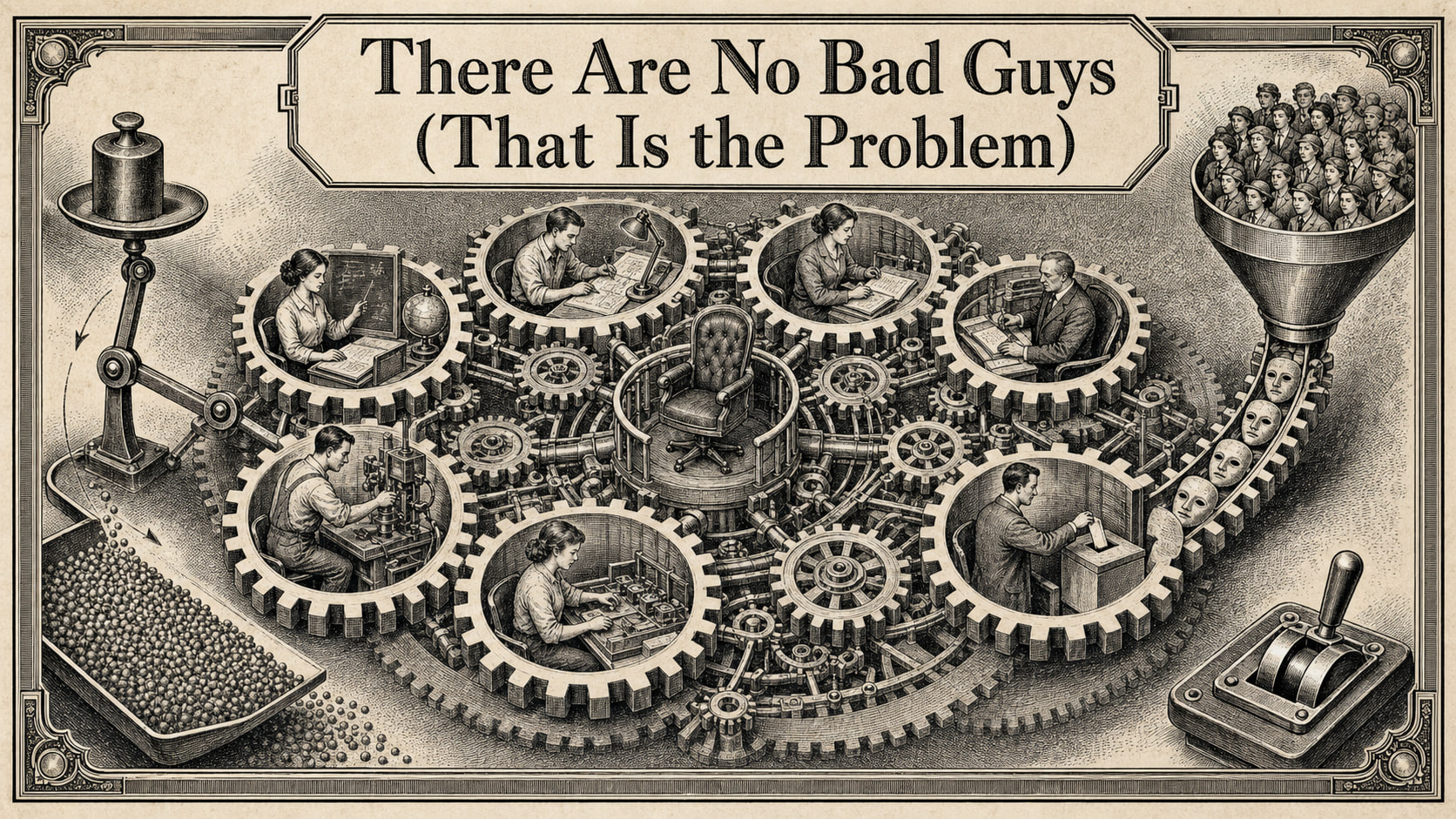
Nobody designed a world that spends 604 dollars on war for every dollar on clinical trials. Four mechanisms produced it without anyone deciding to. That is worse than a conspiracy, because there are no bad guys to remove.
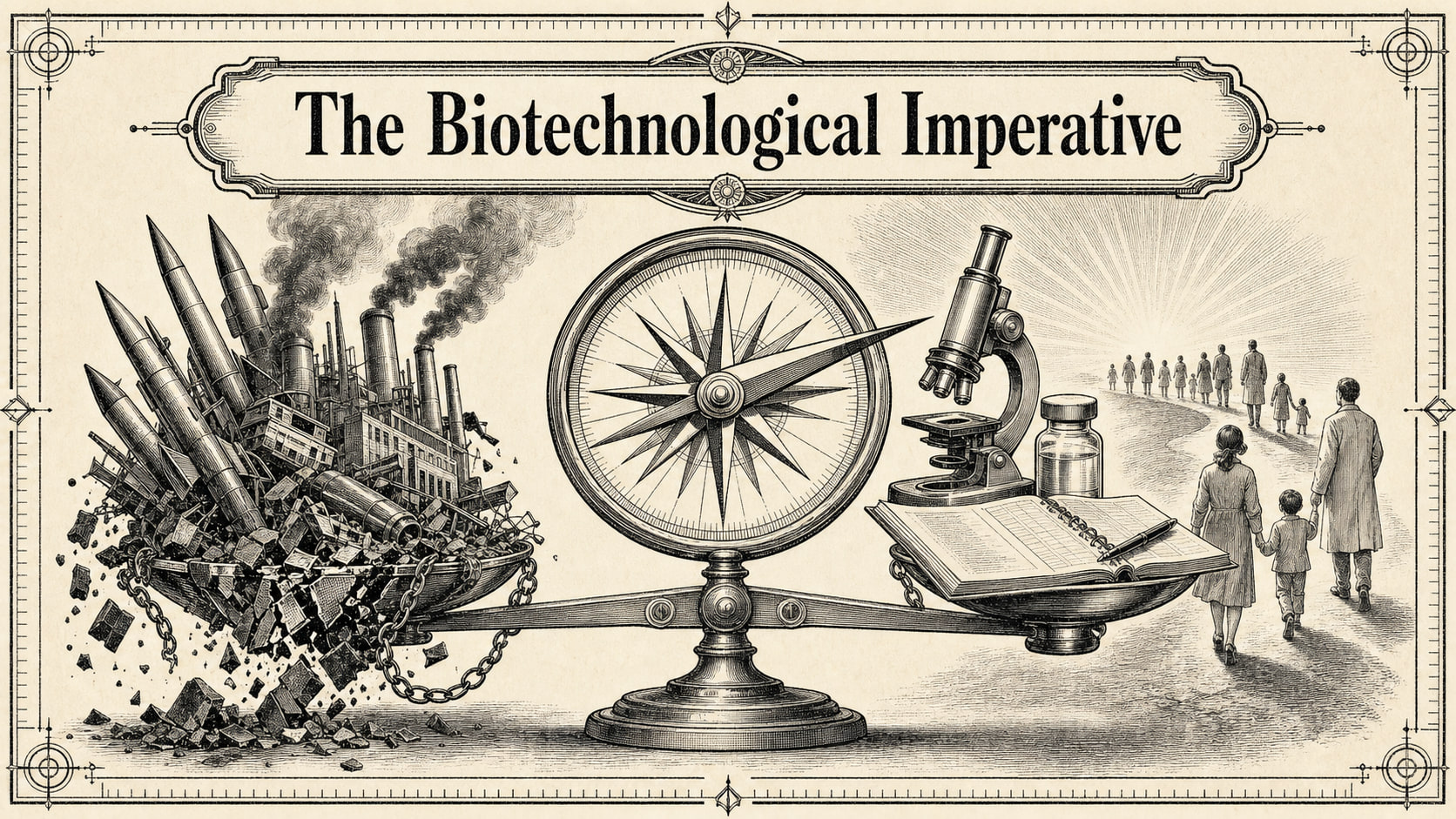
Kant's categorical imperative applied to biotech funding. You cannot universalize 'spend money on killing instead of curing.' Therefore redirecting military spending to clinical trials is not optional. It is a categorical duty.
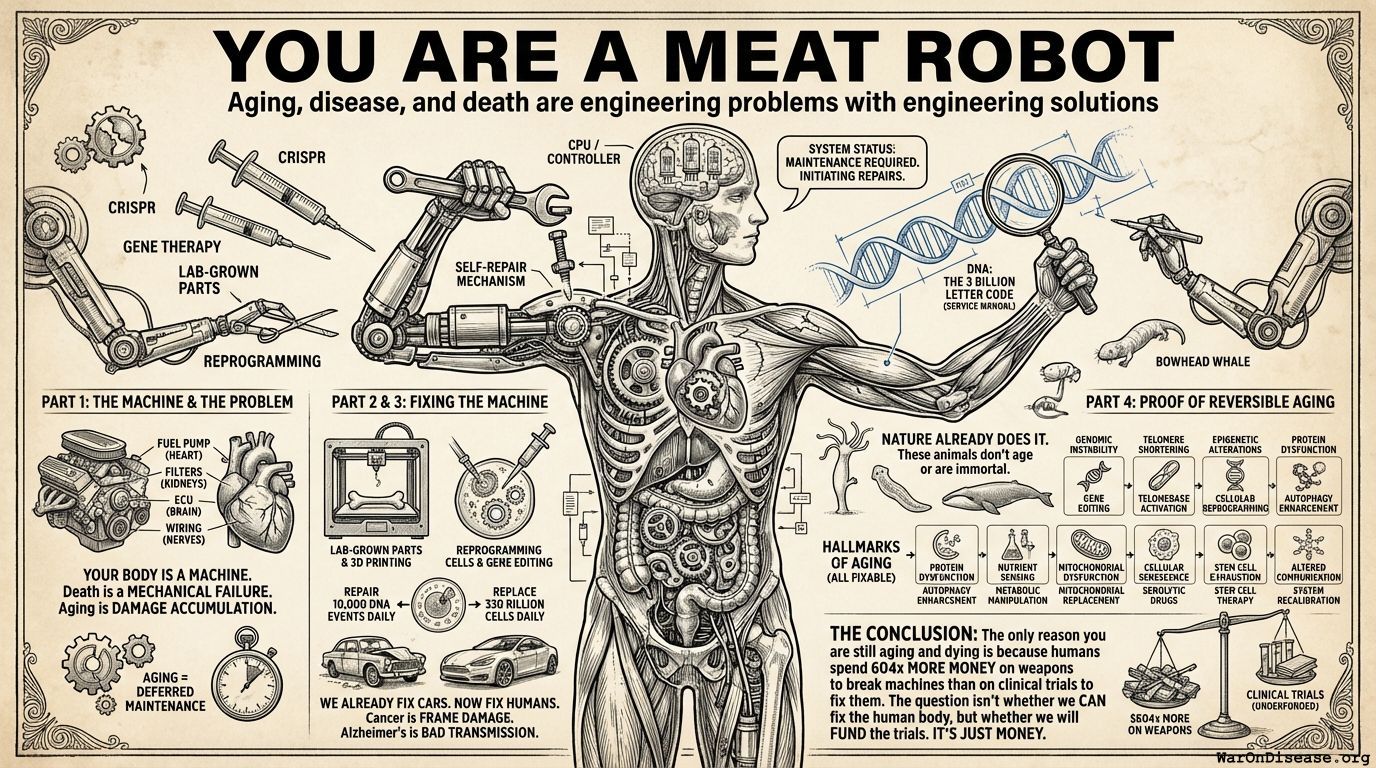
The usual objection to curing all disease is that it's impossible. You replace 330 billion cells a day. You 3D-print windpipes. You reprogram skin into brain cells. You've already proven your body is a machine, and machines are repairable. The only reason you haven't repaired it is that you spent the repair budget on missiles. This chapter removes the "impossible" objection so you can get back to the "expensive" objection, which the treaty solves.