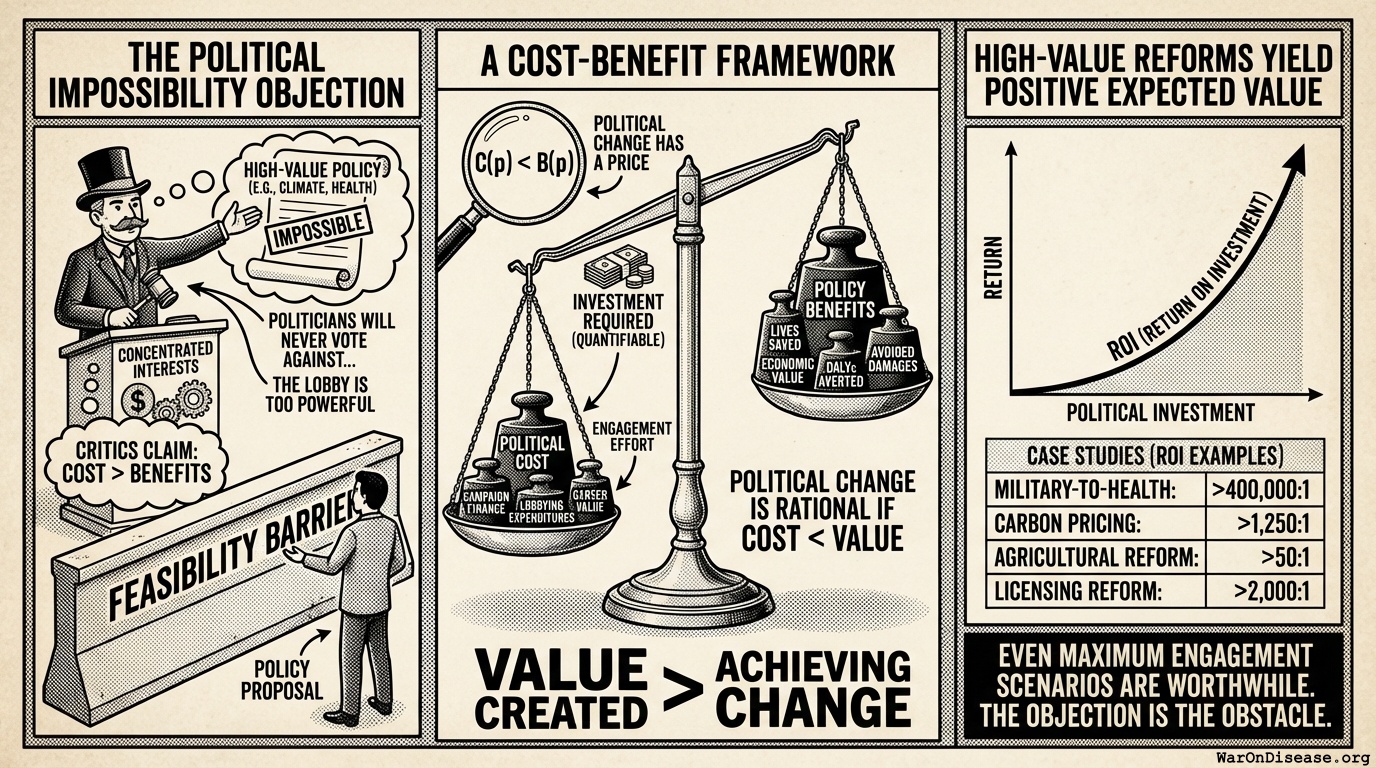
What's the maximum cost to achieve any policy change through legal democratic channels? $25B for the US, $200B globally. For high-value reforms like military-to-health reallocation, this yields a benefit-cost ratio exceeding 400,000:1.
What's the maximum cost to achieve any policy change through legal democratic channels? $25B for the US, $200B globally. For high-value reforms like military-to-health reallocation, this yields a benefit-cost ratio exceeding 400,000:1.
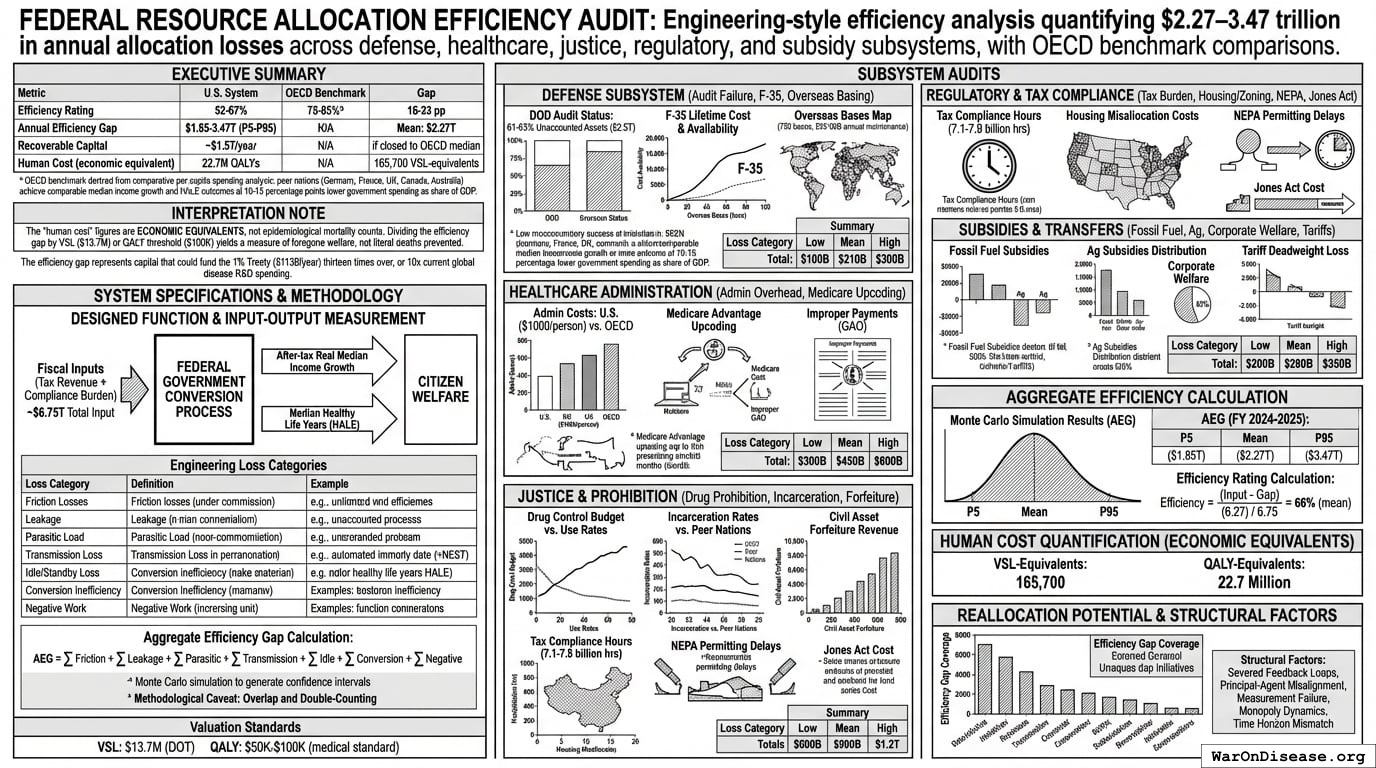
Systems audit estimating an annual U.S. efficiency gap of $4.98 trillion (90% CI: $4.39 trillion-$5.61 trillion), with $2.49 trillion (90% CI: $2.19 trillion-$2.81 trillion) recoverable at OECD-median performance across direct spending waste, compliance burden, policy-induced GDP loss, and system inefficiency.
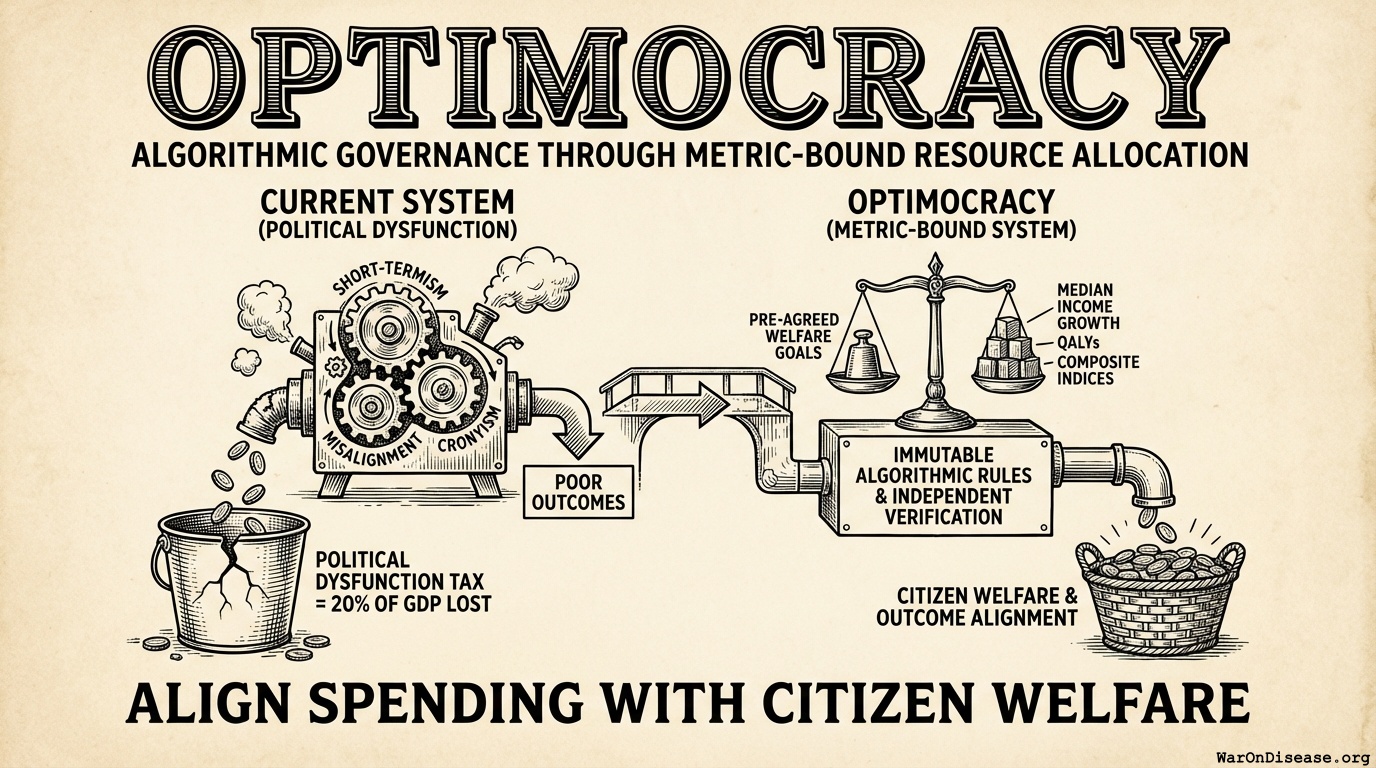
Thousands of jurisdictions have made different policy and budget choices over decades, creating a natural experiment. Optimocracy applies causal inference to this cross-jurisdictional time-series data to identify which policies predict above-average median income and healthy life years. It publishes evidence-based recommendations for every major vote and scores every legislator against them. Getting anyone to act on the scoreboard is a separate question with several answers, none of which require a government's permission.
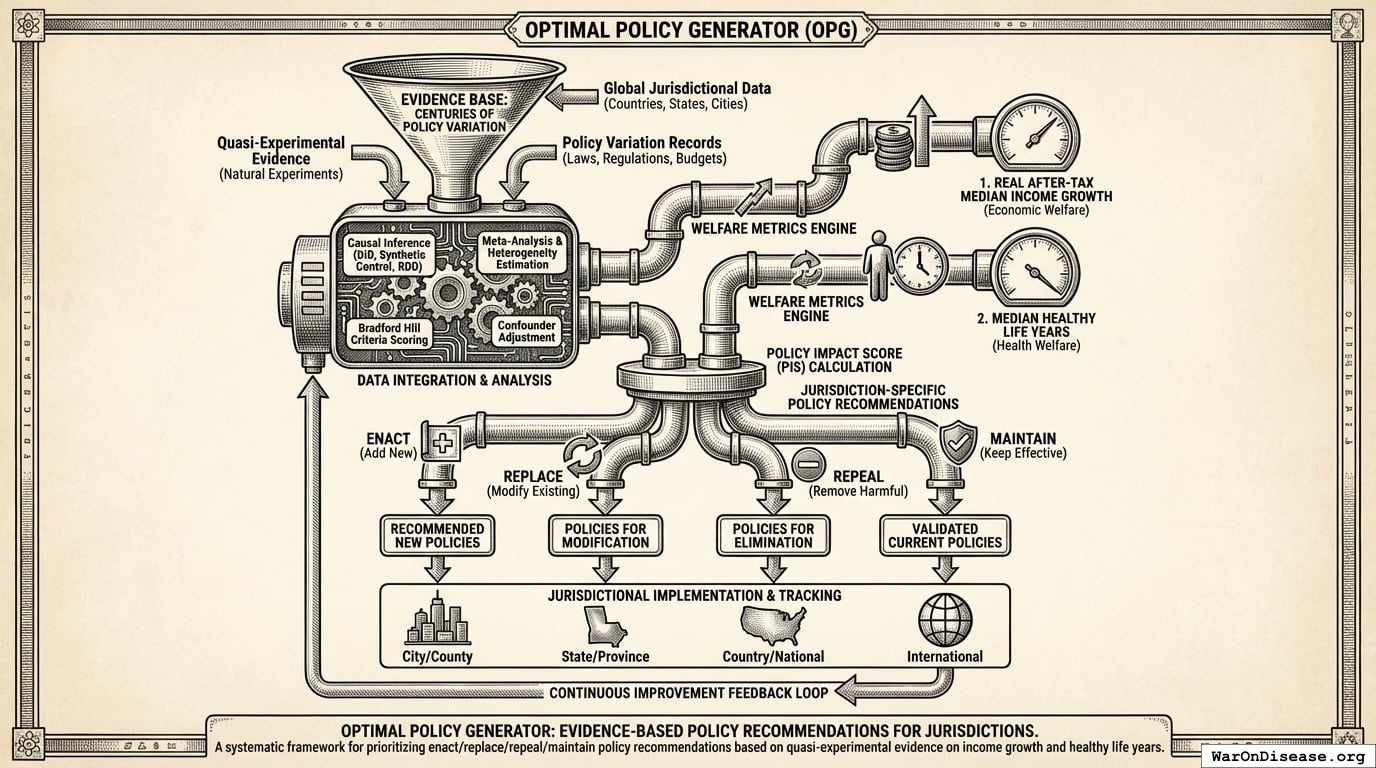
The Optimal Policy Generator (OPG) produces systematic public policy recommendations for jurisdictions at any level (country, state, city), generating prioritized enact/replace/repeal/maintain recommendations to maximize real after-tax median income growth and median healthy life years, based on quasi-experimental evidence from centuries of policy variation data.
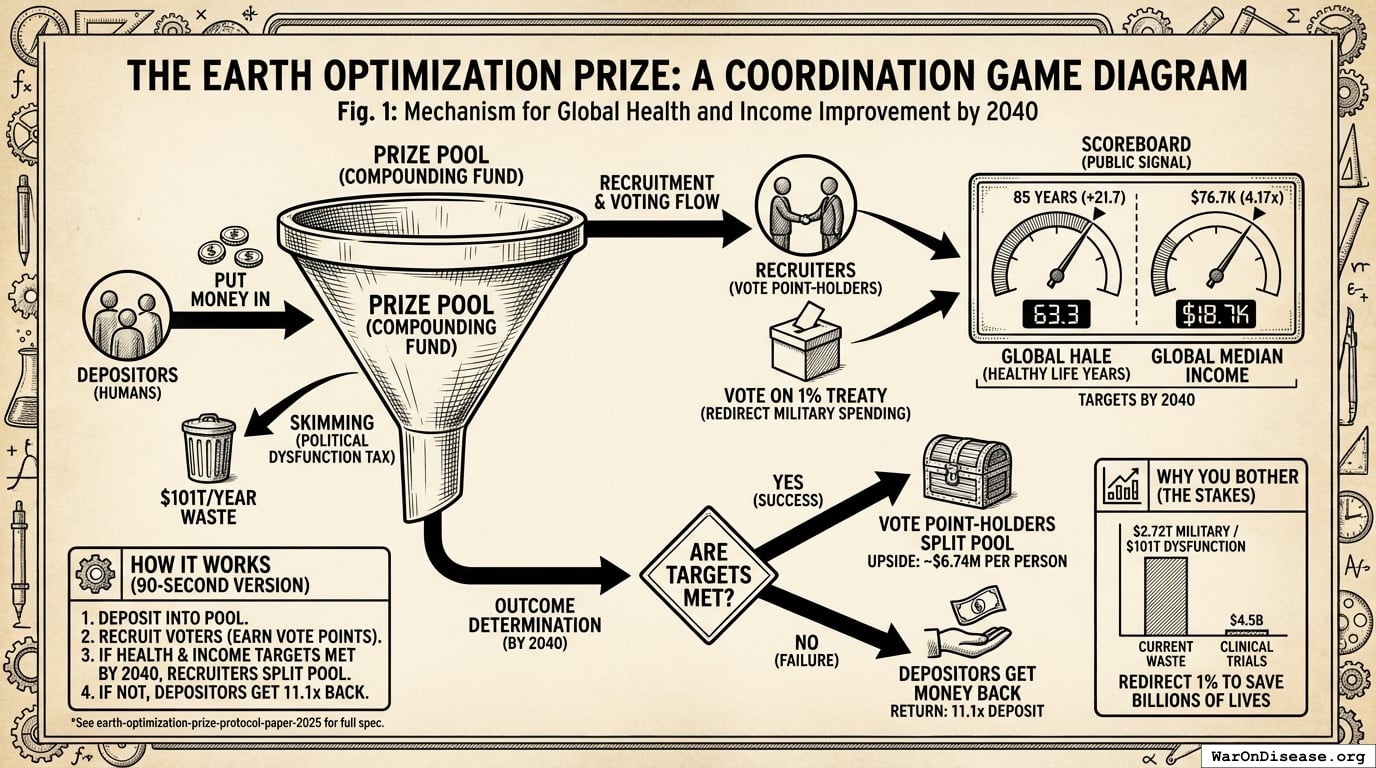
Put money in a pool. Recruit people to vote on the 1% Treaty. If humanity gets healthier and richer by 2040, Earth Optimization Points holders split the pool. If not, depositors get their money back (at 9.03x (90% CI: 5.36x-15.1x) what they put in).
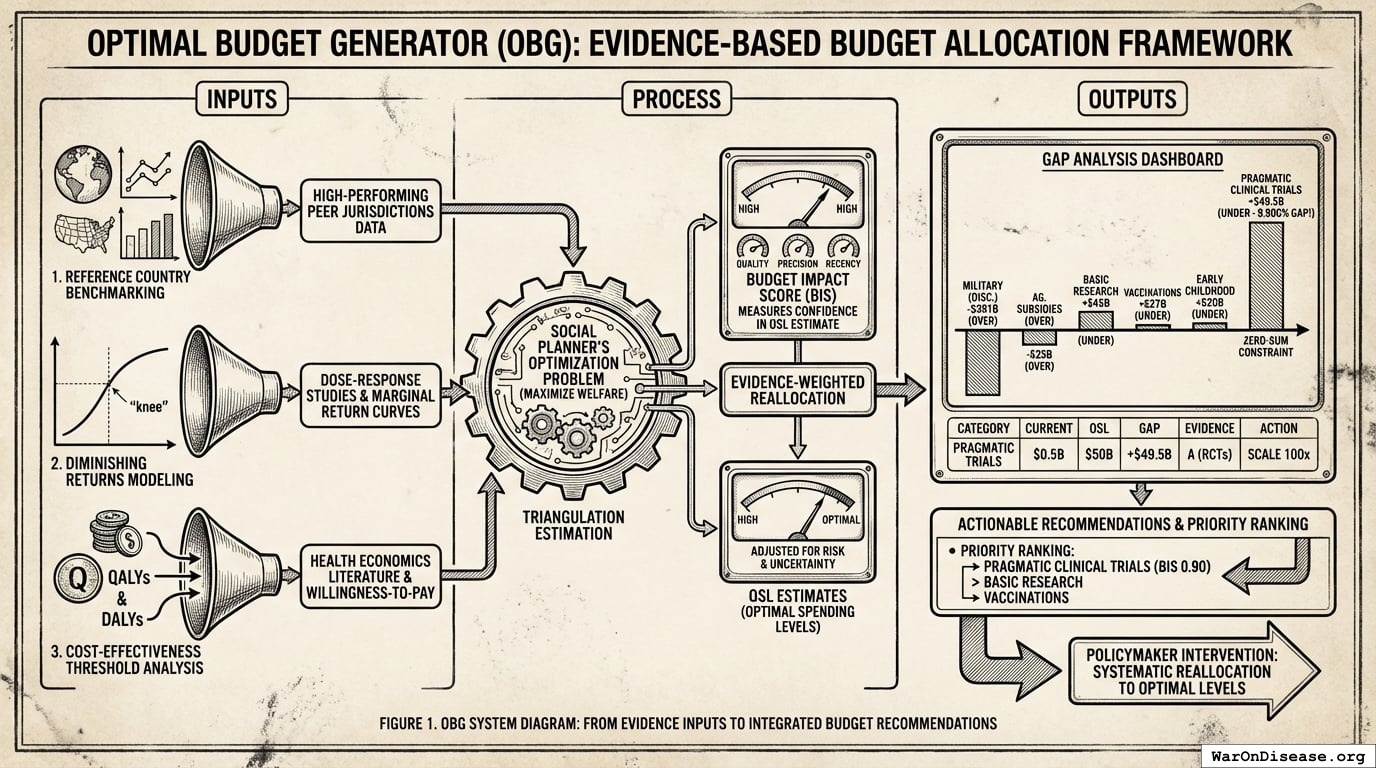
The Optimal Budget Generator (OBG) uses causal inference, diminishing returns modeling, and cost-effectiveness evidence to determine optimal public goods funding levels that maximize two terminal general-welfare metrics: real after-tax median income growth and median healthy life years. For each spending category, OBG estimates an Optimal Spending Level (OSL) and produces a gap analysis showing where current government budgets are over- or underfunded relative to evidence-based benchmarks. The Budget Impact Score (BIS) measures confidence in each recommendation based on the quality of causal evidence.
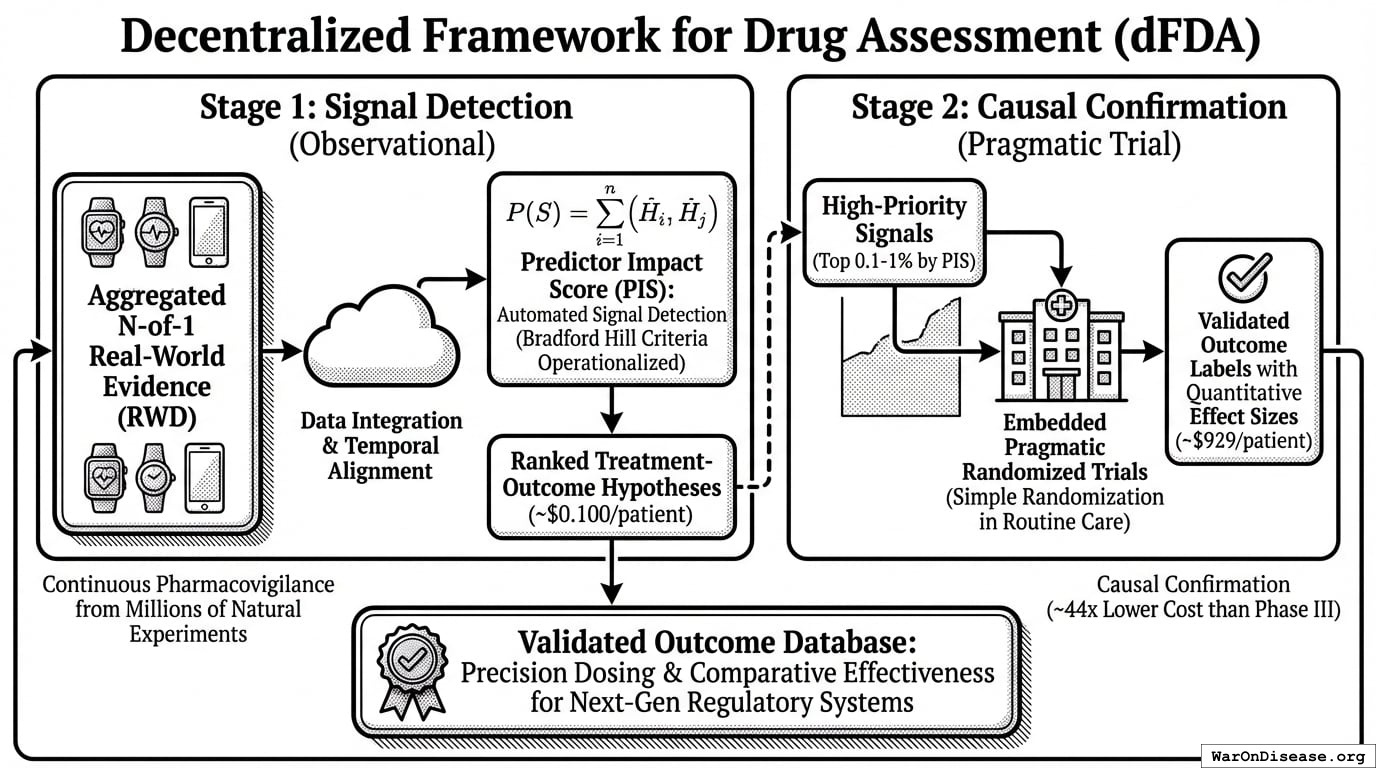
We present the Predictor Impact Score (PIS), a novel composite metric operationalizing Bradford Hill causality criteria for automated signal detection from aggregated N-of-1 observational studies. Combined with pragmatic trial confirmation (based on evidence from 108+ embedded trials), this two-stage framework would generate validated outcome labels at 44.1x (90% CI: 12.8x-210x) lower cost than traditional Phase III trials. This enables continuous, population-scale pharmacovigilance and precision dosing recommendations.
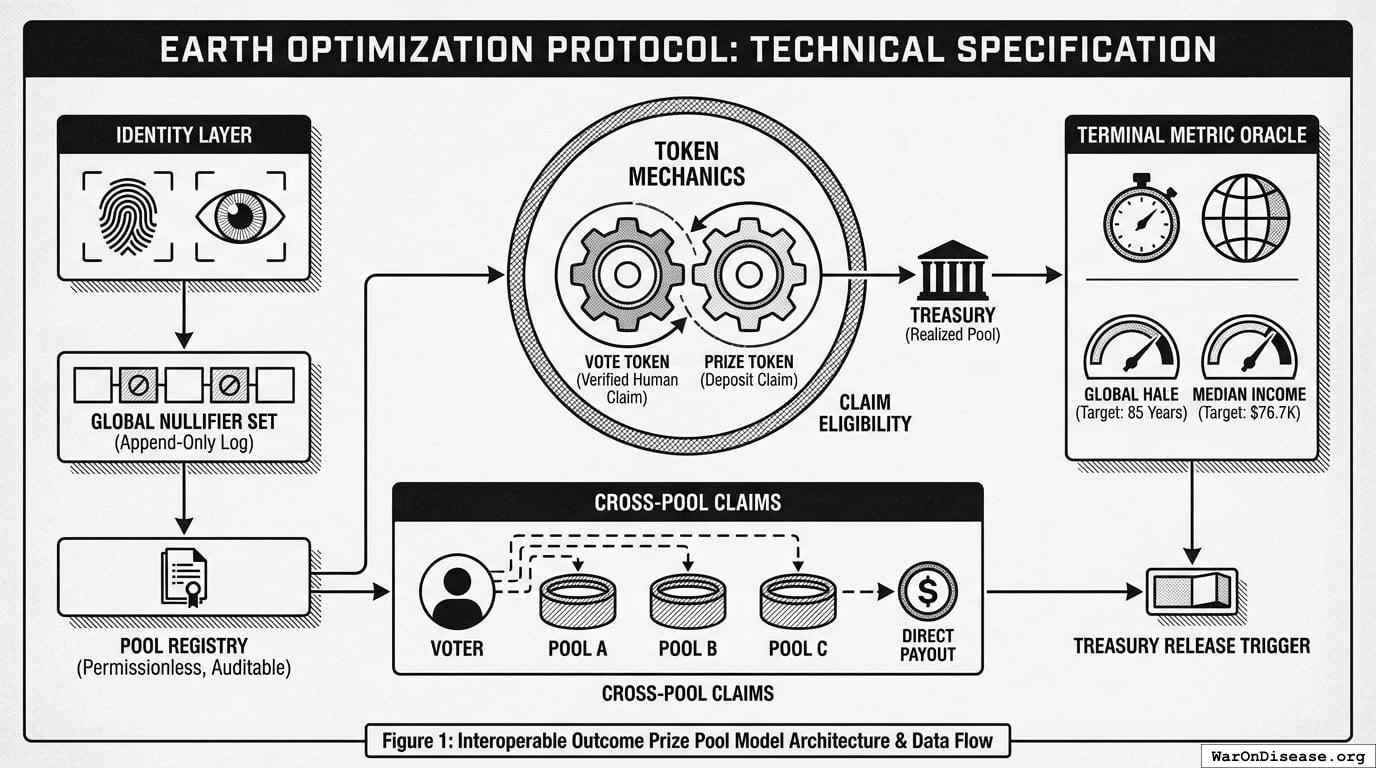
Technical specification for interoperable outcome prize pools using one shared pool model. Two targets by 2040: global HALE and median income matching the 1% Treaty projections. Covers cross-pool proof-of-personhood, a permissionless pool registry, vote, points, and deposit mechanics, direct cross-pool claims, tamper-evident scoreboard aggregation, and a terminal general-welfare metric oracle.
A universal right to try, with evidence. The Act authorizes commercial access after initial human safety testing and makes every covered treatment use teach us something.
A conditional schedule-shift model of state legislation that lets post-Phase-1 treatments finance their own evidence generation and accelerates treatments for global diseases and aging.