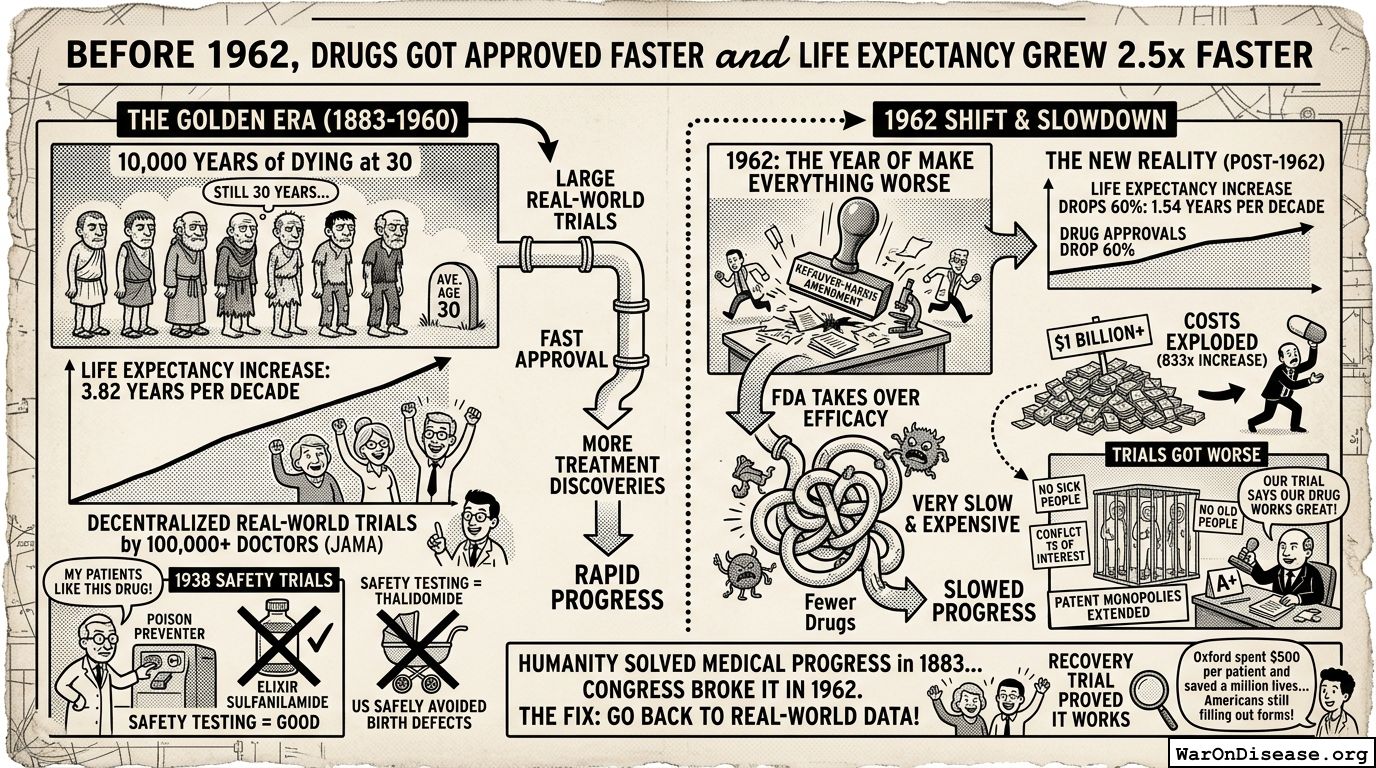
From 1883-1960, life expectancy grew 3.82 years/decade via decentralized doctor trials. In 1962, Congress "helped" and growth dropped 60% overnight. Drug costs went from $1.2M to $1B. Coincidence requires less precision.

Using data to minimize human suffering and optimize life for everyone. A better world through math.
From 1883-1960, life expectancy grew 3.82 years/decade via decentralized doctor trials. In 1962, Congress "helped" and growth dropped 60% overnight. Drug costs went from $1.2M to $1B. Coincidence requires less precision.
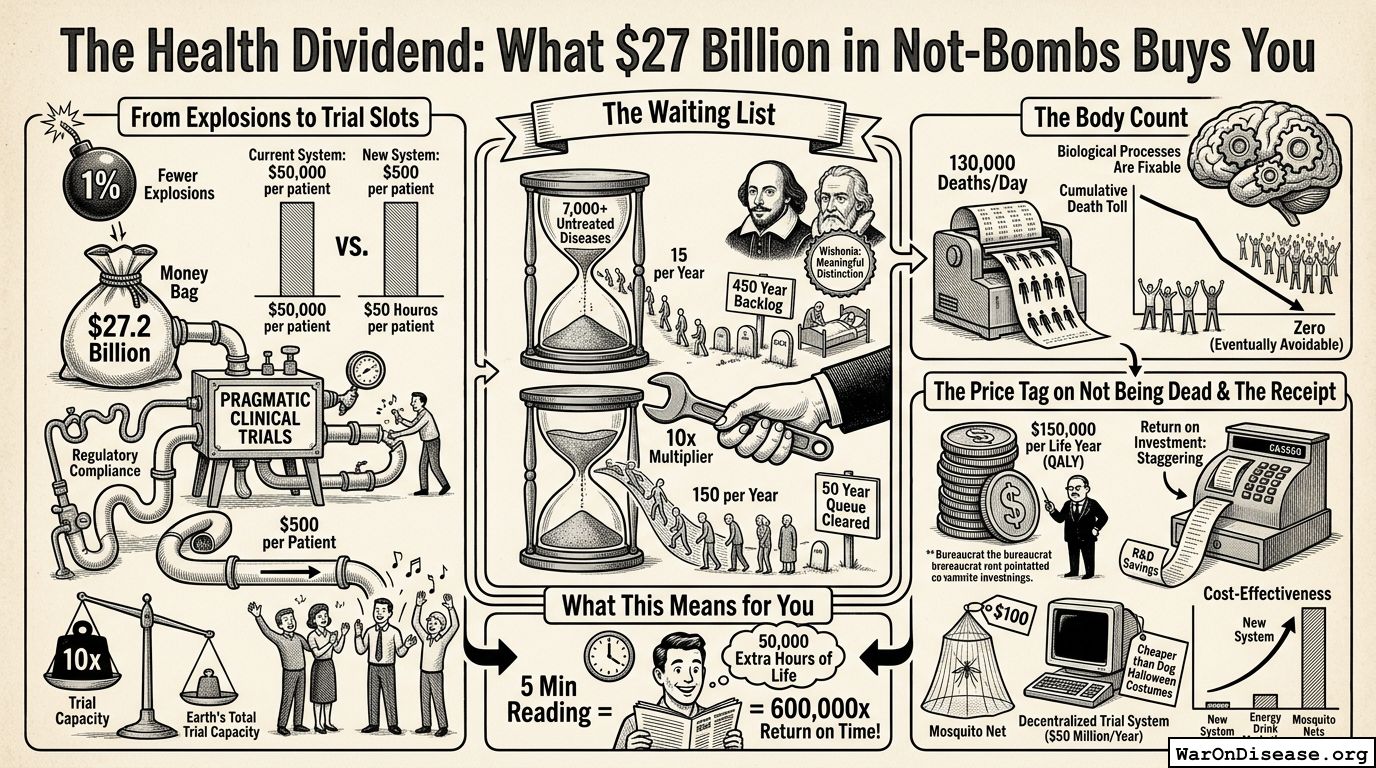
7,000 diseases have zero treatments. At current pace, you'll cure them all in 450 years. Redirect 1% of military spending and it drops to 50. The system costs less to run than Halloween costumes for dogs.
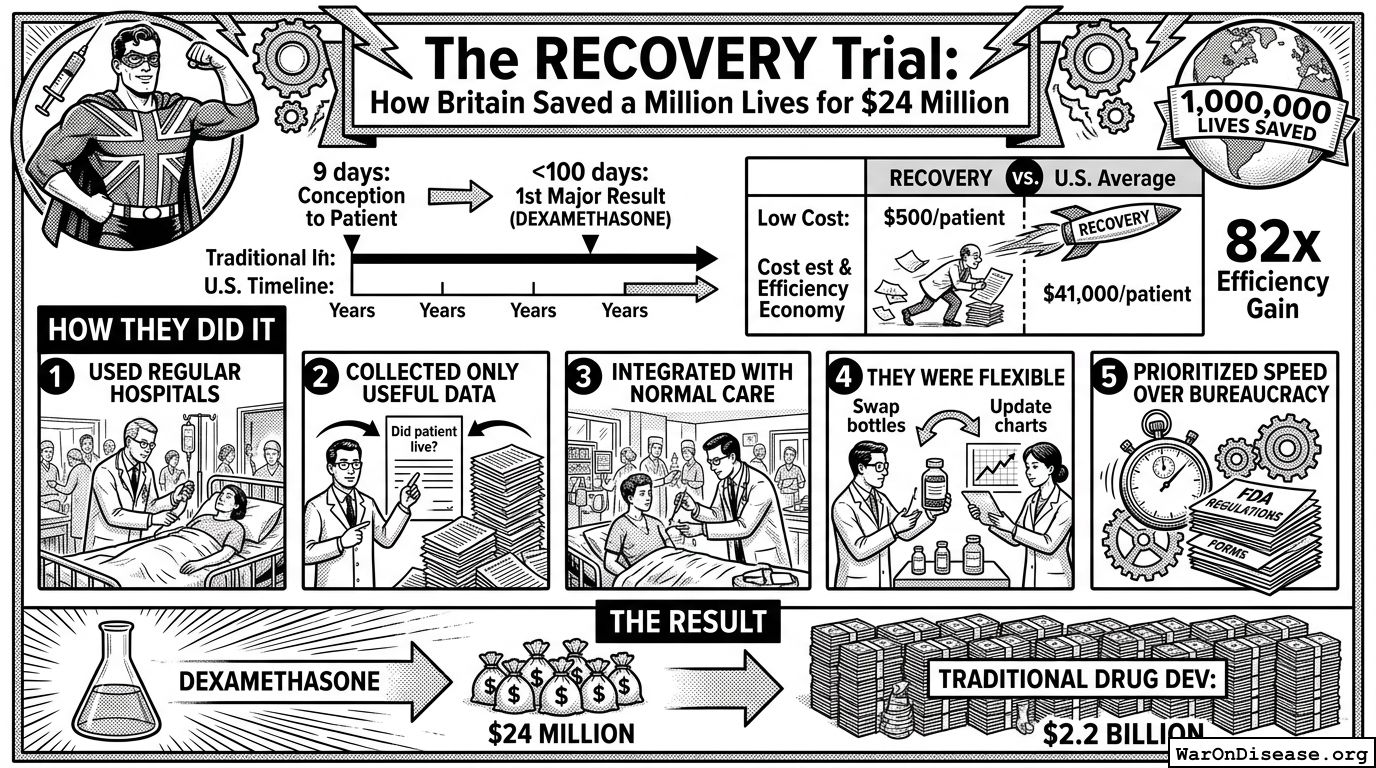
Oxford spent $500/patient and found a $1 steroid saves 1/3 of COVID deaths in 100 days. US trials cost $41,000/patient. That's 82x worse, and people die waiting. The cure was from 1957.
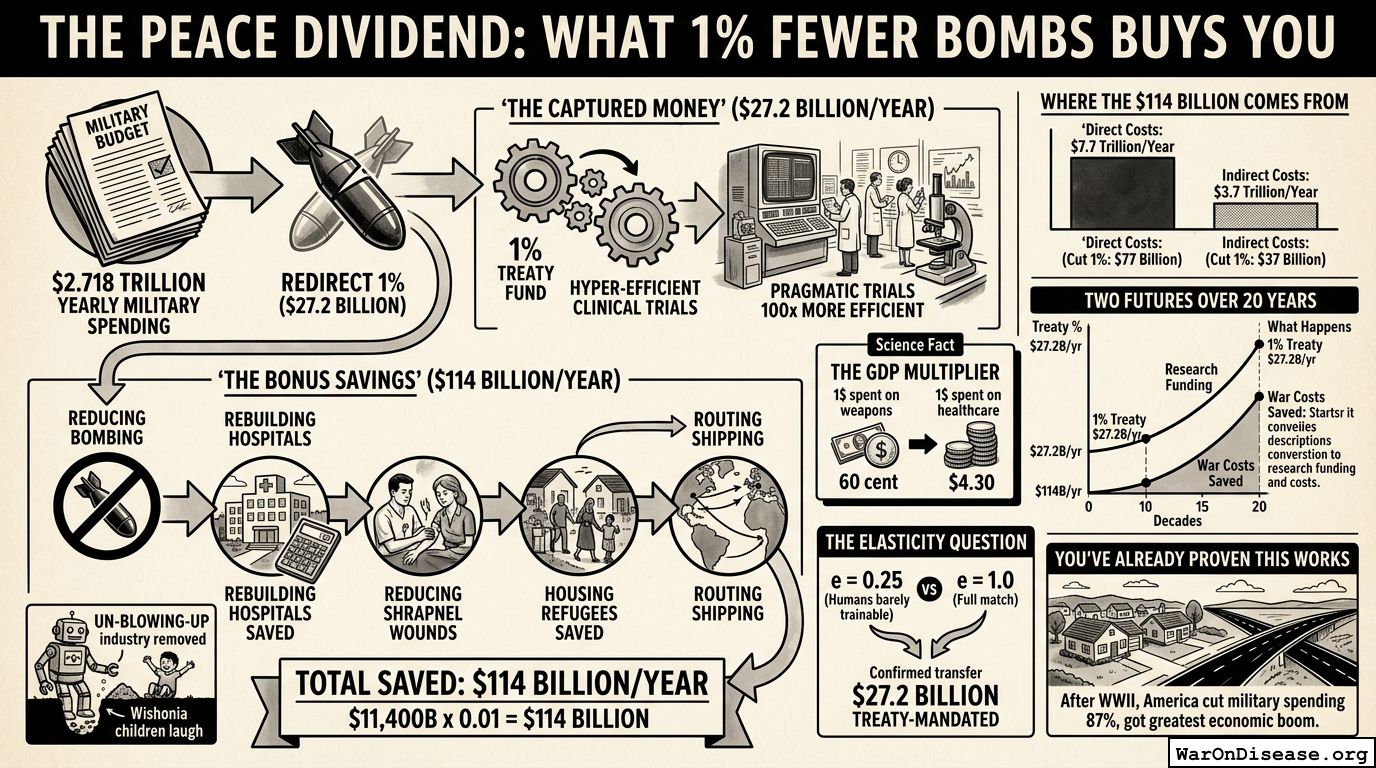
Move 1% of the $2.7T bomb budget to medicine: $27.2B for trials, $114B saved from fewer explosions. Your worst case is the largest medical funding increase in history.
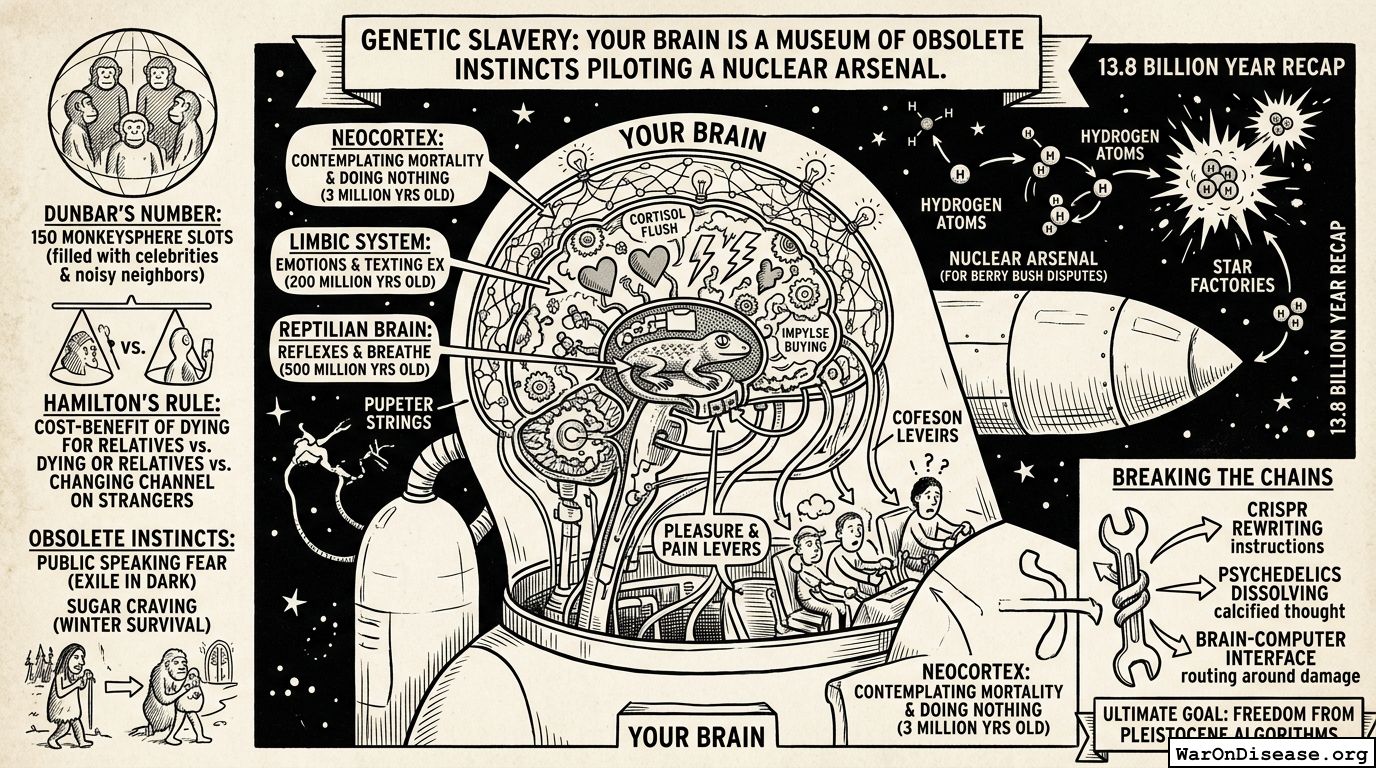
You run 200,000-year-old brain software optimized for hoarding rocks and fearing strangers. You've given it nukes. 5% of your decisions are conscious. Your amygdala handles the rest. This is your owner's manual.
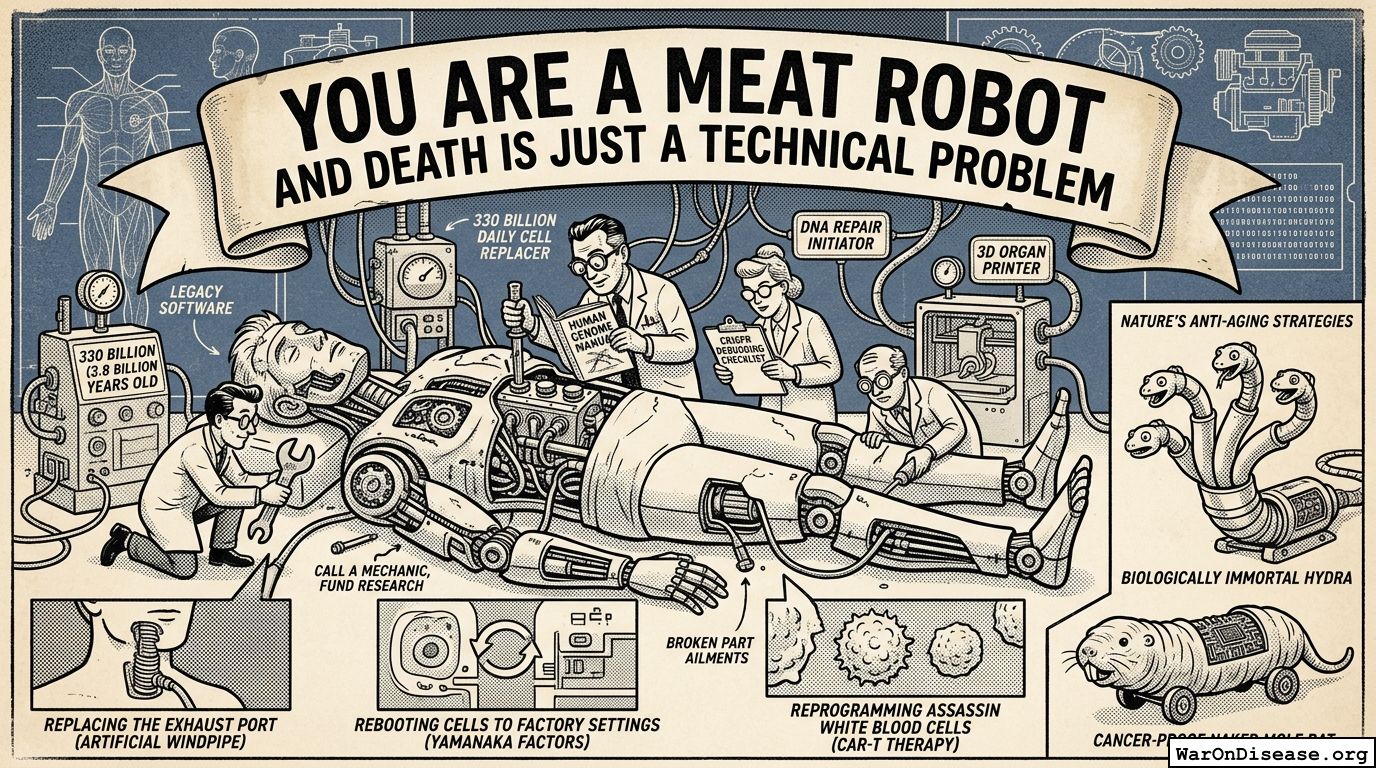
You replace 330 billion cells daily, 3D-print windpipes, and reprogram skin into brain cells. Your body is a machine. Death is a maintenance failure. You've been writing poetry about it when you should have built a wrench.

The US spends 3% more of GDP on government than Switzerland yet lives 6.5 fewer years. What if we just... looked at what works elsewhere and did that? Causal inference says yes.

Voter preferences have near-zero effect on policy. Citizens want 45:1 medical research vs military spending, but get the reverse. RAPPA fixes this with a slider and a dream.

What if saving millions of lives was a good investment? IABs pay 272% ROI to investors who bribe politicians into doing their jobs. Global household wealth is $454T. Opposition is $5T. Do the maths.

Civilization runs at 51.9% efficiency. The governance gap costs $101 trillion/year—$50,500 per household. We're leaving $1.16M per person on the table because meetings run long.